
What subconscious fear makes succeeding feel dangerous?
The Hidden Cost of Appreciation
A leader decided his improvement goal was to show more appreciation to his team. He knew exactly what to say, who to say it to, and when. But the action plan wasn’t the problem. The problem was: there were too many potential downsides to showing appreciation.
“I’m worried that if I really do this, these people will stop trying hard.”
Anything else?
“Yes, I’m also worried that I won’t look like the boss anymore. I’ll be seen as too soft.”
Good point. Anything else?
“The people who don’t get appreciation may think I don’t like them, but really it’s not personal. It’s about their work and recognizing excellence.”
So the inertia was pushing him to avoid making the change and continue as usual: leaving excellence unmentioned and only voicing corrective feedback.
This leader had many very real and reasonable concerns that have been stopping him from accomplishing his goal. Basically, the threat outweighed the rewards.
The SCARF Model
David Rock’s (2009)¹ SCARF model is a handy way to remember 5 main categories of “threats” that might stop us from making a change. His research points to the fact that our brains are wired to seek out (and avoid losing):
- Status = felling important in a pecking order of some kind
- Certainty = predictability and clarity
- Autonomy = the sense of having control
- Relationships = trust, collaboration, being in the “in group”
- Fairness = justice and equitable treatment
Let’s look at the example of the leader once again. While he knows it would be helpful to his team if he showed appreciation, it threatens his Status (“I won’t look like a boss”), Certainty (“Will they stop trying hard?”), and Relationships (“People might think I don’t like them”) and even Fairness (“It’s about the work, and it’s not personal”).
So there’s a SCARF threat score of 4/5 right there!
The good news is: if you’re worried about losing your SCARF, you’re not crazy, you’re just human. We’re all wired this way.
Of course, one or more SCARF elements will probably resonate with each person stronger.
But the real question is: what can you do about? You need your 3Cs to explore truth and options.
3Cs and SCARF
After you’ve identified a challenging goal to make progress on, use the 3Cs of Adaptivity to make progress by pinpointing the SCARF threat(s) that feel most real.
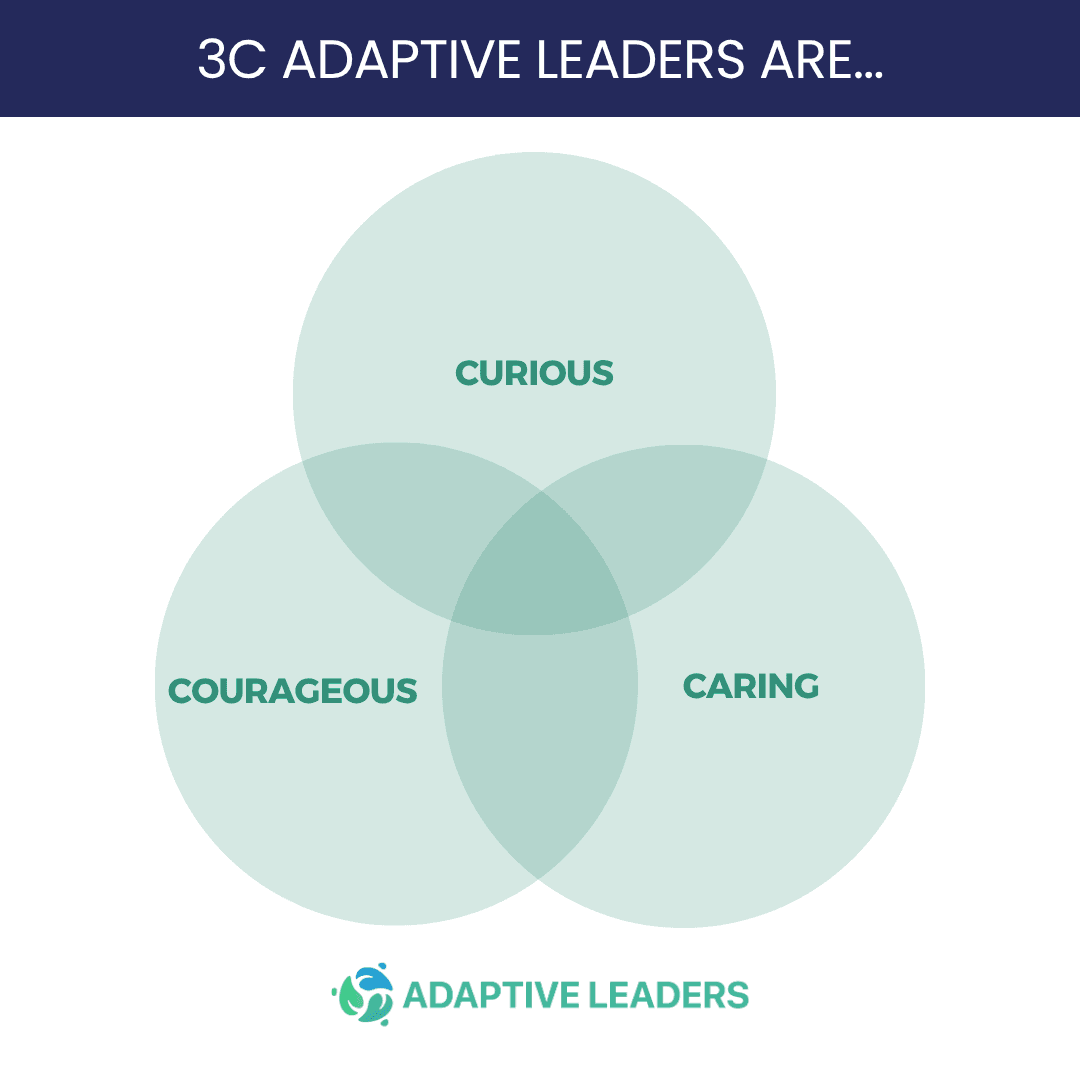
(These questions assume you’ve got a specific goal/situation in mind.)
Curiosity
- Which element of SCARF is most important to you here?
- What could you do to reduce the threat to that element of SCARF?
- What direct cause and effect relationship might you be assuming that may not be 100% true?
Courage
- How can you take a small next step that doesn’t panic you?
- What brave question do you need to ask before you take that step?
Care
- How might this action (for example, showing appreciation), actually help this element of SCARF?
- What do your people need from you while you investigate this?
- What do you need from you in terms of self-care?
These sorts of questions will help you name what’s been hidden and face the threats head-on to make real progress.
The Adaptive Accelerator™
This is the sort of exciting, deep work we do with leaders in our free 1-hour Adaptive Accelerator™ program. If you’d like to make a fast and lasting change to flex your adaptivity, join us online or in person near you.
1. Rock, D. (2009) "Managing with the Brain in Mind," Strategy+Business, Issue 56 (Autumn).
Next Steps?
Not quite ready for the whole experience? Try our 3-minute free Adaptive Snapshot for immediate insight and specific advice on your own 3Cs.