
Are you too nice?
The Boss is Too Nice
Business leaders sat at the round table discussion and two of them commiserated: “My staff tells me I’m too nice.”
Another agreed and told this story about himself:
“A member of my team has a history of making mistakes that cost the company thousands of dollars. I told her, ‘Next time it happens, that’s it. We’re going to have to let you go.’ But then, it happened again, and I just couldn’t fire her. Even though I often get very angry with my staff, when it comes to firing, I’m just too nice.”
The other leaders asked him, “So where is she now?”
“She’s still with us,” he replied.
Clarity and Kindness
The other day, one of our coaches was at a conference with a lot of people he didn’t know. One of them had a very nice beard, but there was a not-so-nice breadcrumb stuck in it. It wasn’t hugely distracting. But it was noticeable.
The key detail is: he had just met this person, so it was hard for him to feel good about pointing out the crumb. When he finally did, there was a moment of embarrassment (on both sides), especially since there was no mirror handy. It involved getting out of a cell phone and using the reverse camera, which drew even more attention to the crumb.
But after it was out, both people seemed relieved and the discussion continued mostly naturally.
We’ve all been in similar situations, so there’s nothing remarkable about the discovery that being kind often makes us feel awkward. But what may not get as much attention is the list of alternative ways people might employ to correct the problem.
The person who sees the “problem” (food in the teeth, toilet paper stuck to a shoe, etc.) has a wide range of options available besides saying “You have a little thing there.” For example, they could:
- Do nothing (which equates to hoping the problem will get solved some other way)
- Pre-emptive reciprocity (“Do I have something my teeth?” hoping they will then ask the same question)
- Redirection (“Is that a mirror over there? I love just checking a few things whenever there’s a mirror…”)
- Etc.
What do these other options have in common? They’re just not as clear. They may still be misunderstood, and they all run the risk of not making progress.
Clarity and the 3Cs
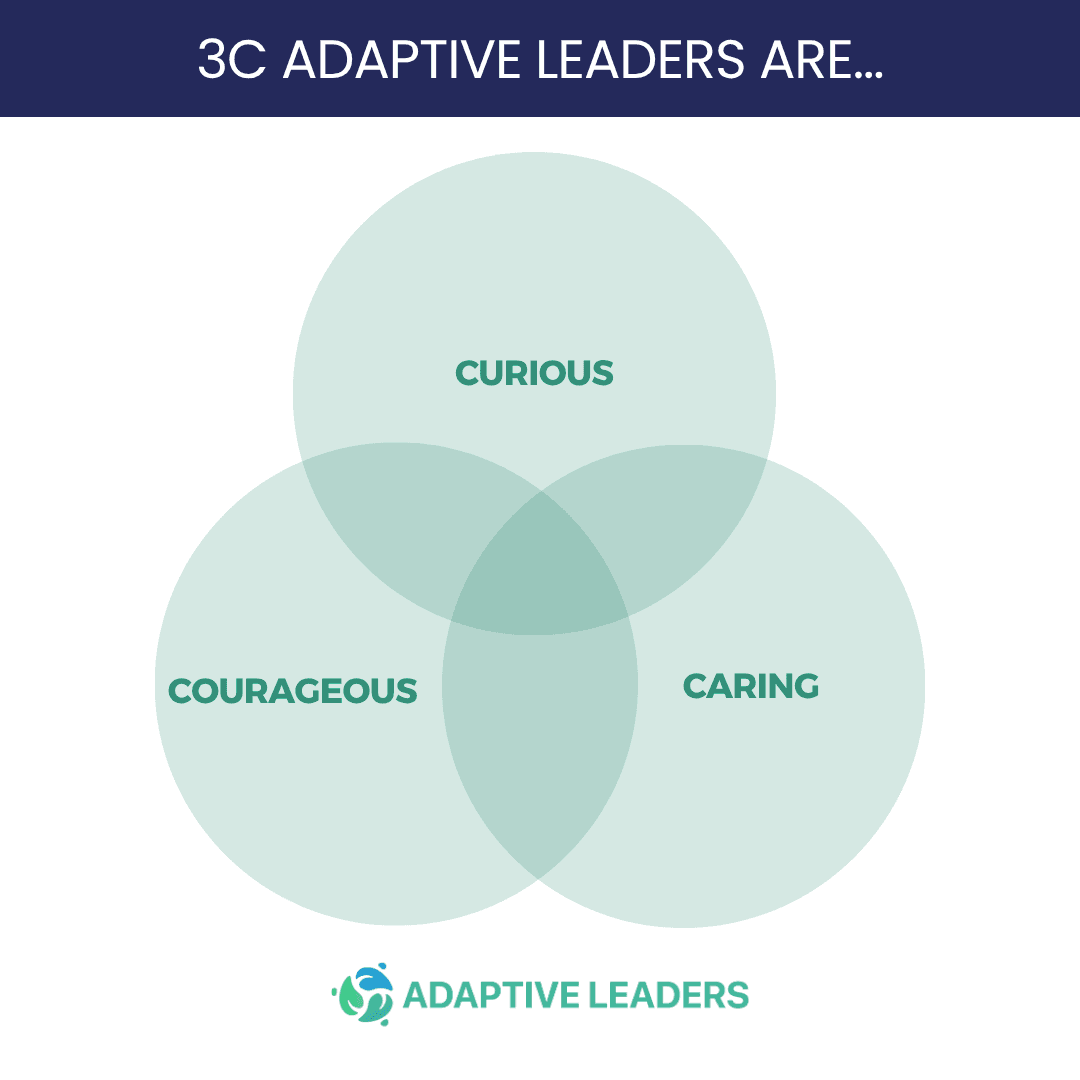
The slogan “clear is kind” has been around for a long time. You need all 3 Cs to be really clear and kind, but mostly Courage.
Courage
- Can I deprioritize my own comfort for the sake of what’s best for the other person?
- Is solving this more important than being liked?
- Am I willing to take action rather than delay?
In these cases, Courage becomes the spark that ignites the other 2 Cs.
Curiosity
- How will the other person respond when I act courageously?
- What unforeseen results (positive or negative) might occur?
- What have I been assuming all along that has been guiding my typical response to these situations?
Care
- How will momentary discomfort actually benefit the relationship in the long term?
- How will others who are watching benefit from my acting courageously in this situation?
- What is the difference between being nice and being kind?
Give the Gift of Clarity
Many leaders we work with across cultures and across industries are very “nice.” But lack of clarity actually is not nice for the team. It can be a source of stress for your staff. When a boss tells you, “The next time this happens you’ll be fired” and then you don’t get fired, that’s not really helpful. In fact, it’s liable to make people more nervous and more likely to make mistakes.
Why?
Because now the reliability of the boss is in question. And not just from the person who didn’t get fired. Other people will find out and start to question which messages from the boss should be taken at face value and which should not.
It would be better to say: “The next time this happens, we will have to look at making a change,” which is much easier to follow through on. There may be real concerns with firing the person, so don’t promise that. Make a promise you will stick to.
It takes courage to be clear because you’re actually holding yourself accountable as well as the other person. In the same way you want your team following through, you also need to follow through.
But it will take adaptivity and outdoing your normal level of Courage, Curiosity, and Care to be more clear than you’re used to being.
The Adaptive Accelerator™
This is the sort of exciting, deep work we do with leaders in our free 1-hour Adaptive Accelerator™ program. If you’d like to make a fast and lasting change to flex your adaptivity, join us online or in person near you.
Next Steps?
Not quite ready for the whole experience? Try our 3-minute free Adaptive Snapshot for immediate insight and specific advice on your own 3Cs.