
An article from our “At Home” series
How can you leverage Accountability outside work?
The Landlord Problem
A family we know started renting a new apartment and needed the landlord to register their car so they could access the parking garage. Because of the timing, they had already started living in the apartment while their car was stuck outside. While not a major disaster (just an extra walk), it was an inconvenience and not what they wanted long term.
The problem was, although the landlord agreed to register the car, there was nothing the tenants could do to get the landlord to take action. They waited and reminded and nothing was working. And they were getting more and more frustrated because this isn’t what they’d agreed to!
Accountability at Home
In a leadership context, we usually talk about the Accountability piece of our Performance Leadership (aka EMMA) framework as it relates to direct reports:
- Expectations
- Motivations
- Measurements
- Accountability
However, you can use the same principles of Accountability at home even when it’s not such an obvious hierarchy (such as parents and children, although that’s a great application too).

We define it as:
Accountability = Owning the follow-through for commitments
In the case of the landlord story, the tenants needed the landlord to take ownership of his commitment to register their car. However, the tenants had no formal authority over the landlord (to fire him). In fact, in the country they were living in, landlords are thought to have the final authority over tenants.
That makes the landlord story a case of “managing up” to highlight and address the lack of accountability.
Incrementally “Turning Up” the Intensity
You may have seen a sound board that controls the volume of a microphone. The higher the slider goes, the louder and more intense the sound.
That’s how we lie to think of the conversations to close “Accountability Gaps” when someone isn’t taking enough ownership of their commitments. You don’t need to get louder (although some people think that’s what increasing accountability means). Instead, you need to change the discussion to higher and higher levels of intensity.
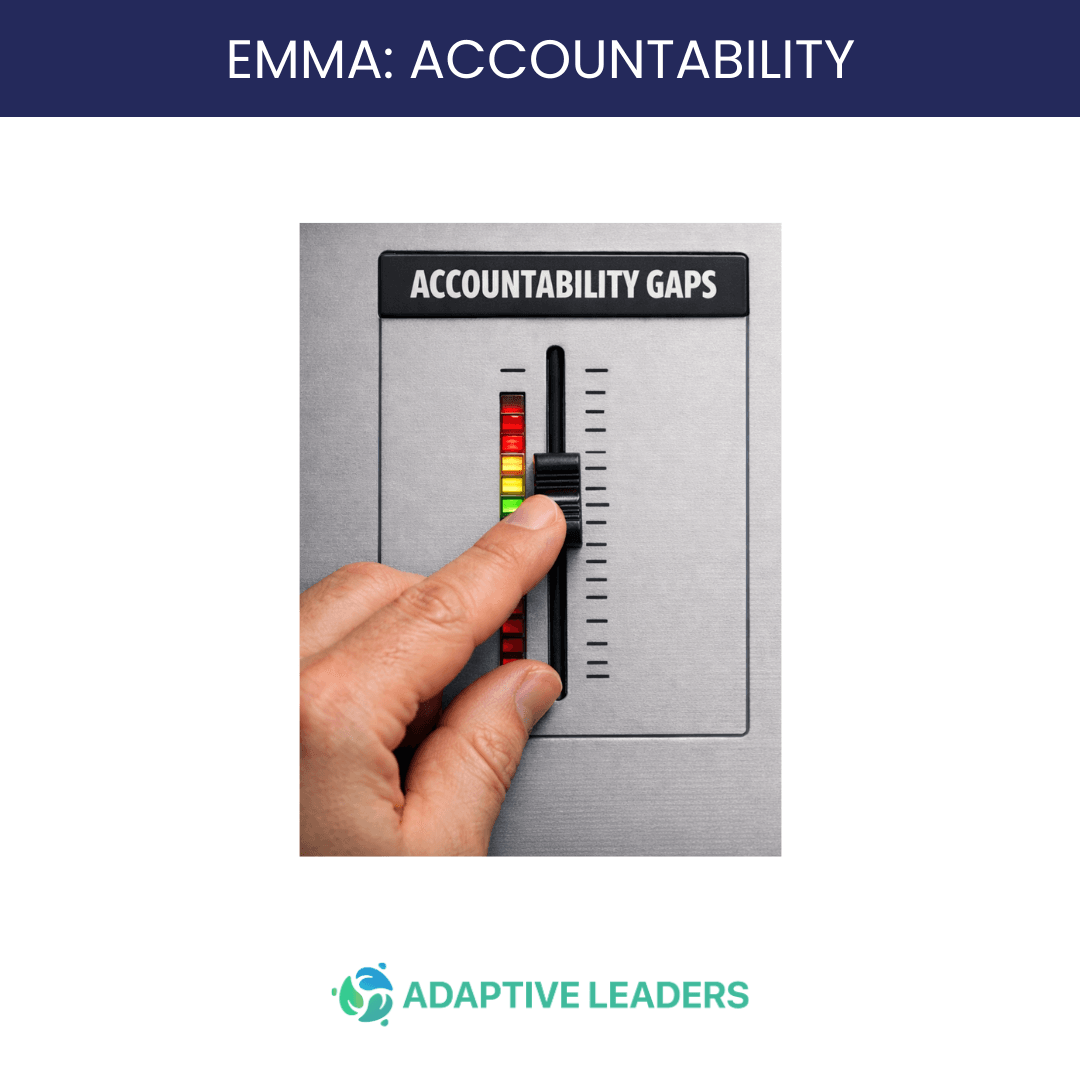
The main idea is: don’t skip levels.
By gradually increasing the intensity, you give the other person the best chance to change while giving your relationship the least chance of taking damage. Skipping levels can have the opposite effect: the person probably won’t change, and the relationship probably will be damaged.
Here’s what we mean by levels of intensity:
- Set Clear Expectations
- Ensure Understanding
- Raise Concerns
- Explore Options
- Clarify Stakes
- Hold the Line
- Escalate Support
As I’m sure you can feel, Levels 1 and 2 are not intense at all, but they are often skipped.
What we see again and again (at home as well as work) is people will start with Level 3 (“I’m worried…”), repeat Level 3 again louder (“This is a major problem!”), maybe dip a toe into Level 4 (“Is there anything you can do quickly?”) and then jump to Level 7 (“I’m reporting you…”).
Fortunately, our friends didn’t do that. They knew about the Accountability Slider and they used it to great effect. Let’s look at the language they used.
Accountability for the Landlord
Here are the phrases our tenant friends used for their landlord.
- Set Clear Expectations
“Just to be clear, we cannot register our own car, and you need to go to [place] to do this. Until you do, we cannot get our car into the parking lot as we agreed.”
- Ensure Understanding
“Are you able to do that this week?” (The landlord replied “yes,” but then didn’t do it.)
- Raise Concerns
(the next week) “I’m worried that the parking spot we’ve been using will start charging us. Can you please do it this week?”
- Explore Options
“If you don’t want to come and do it, you can send a letter authorizing us to do it. However, that will require… Which do you prefer?” (He still said he’ll do it, but didn’t.)
- Clarify Stakes
“We will need to start paying for parking outside and the total cost will be xxx / day. I’m assuming you don’t want to pay for that, right?”
And that’s when the landlord actually took action.
They got all the way to Level 5 (which took 2 weeks) and they were able to stay calm and respectful. They feel their relationship wasn’t damaged and they gained some valuable experience in learning what motivates this landlord.
Hypothetically, here’s what it they might have said at the next 2 levels:
- Hold the Line
“We’ve been asking for 2 weeks and haven’t seen any progress on this, so we’re going to need to take next steps.”
- Escalate Support
“We’ve reported this to… and we’re hoping for a quick and pleasant resolution.”
One bonus tip: it’s not about speed, it’s about increments. This couple could have moved quicker than two weeks if they had wanted. The exact timing and how long you give the person to respond between each step depends on your context.
3Cs and Accountability
What’s a situation outside work where you need to address some Accountability Gaps? You can use the landlord story as inspiration…maybe.
But maybe it had the opposite effect on you. How did you feel reading that story and seeing all those phrases? Probably there was a point at which you felt something shift inside you. Something like “I could do everything up to THIS point, but I’m not sure I could say/do THAT.”
Most people are comfortable with some of the levels but not as comfortable with others. That’s where the 3Cs come in.
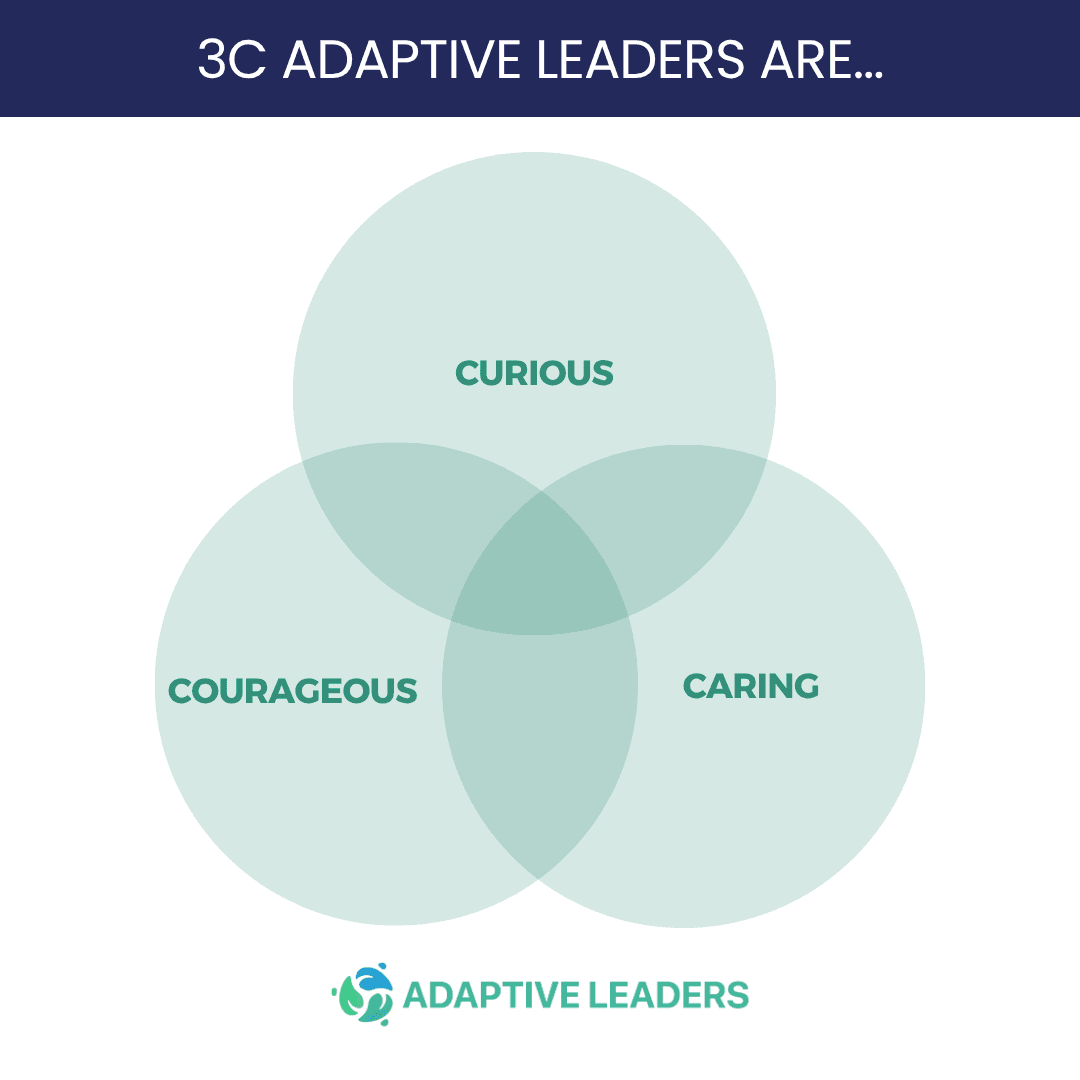
You can use the 3Cs to examine your own part of the Accountability problem:
- Curiosity to draft what language you might use at each of the 7 Levels. What questions would you want to ask for each Level?
- Courage to go beyond the level you normally might stop at.
- Care for the relationship as shown by pre-planning your language and by ensuring you don’t skip any levels.
You can use Accountability at home to get some new and great results, but don’t forget the conversation is between two real people. The 3Cs of adaptive leadership humanize the discussion.
Next Steps?
Forward this article to team members (or a friend or family member if you discern that’s a good idea).
Also, feel free to take any images from this article and print, share, save, etc.
Finally, if you’d like to talk about an Adaptive Leader Journey for your team, feel free to book a free 20-minute call with one of our coaches to discuss how we can support you in your next big breakthrough.
Looking forward to talking to you soon!