
What’s the relationship between appreciation and accountability outside work?
The Landlord Problem (continued)
Remember that story about the landlord who wouldn’t take ownership of his commitments?
Well there’s another important side to the story. That couple actually really enjoyed renting from him because he did many things well:
- Quick replies and solutions when things broke
- Let them remove some furniture they didn’t like
- Shared contact info for important people in their neighborhood
They’d done such a good job with the tough conversations that we had to ask how much appreciation they’d shown for the things the landlord was doing well. “Does he know?” we asked.
“Probably not,” they admitted. “We just sort of assume he should do those things, so we haven’t deliberately expressed appreciation for them.”
That’s a missed opportunity.
Appreciation is Part of Accountability
Accountability is largely about letting the other person know you’re paying attention. When they’re not living up to your expectations, or taking ownership of their commitments, you need to have some conversations to bridge those “Accountability Gaps” as we talked about last time. They need to know you’re not going to just quietly let them keep underperforming.
But there is another “slider” for when they’re doing a great job: appreciation. They also need to know you’re not going to quietly let them meet or exceed your expectations. By showing your appreciation, you also reinforce your expectations. The problem is that slider may still be sitting at zero.
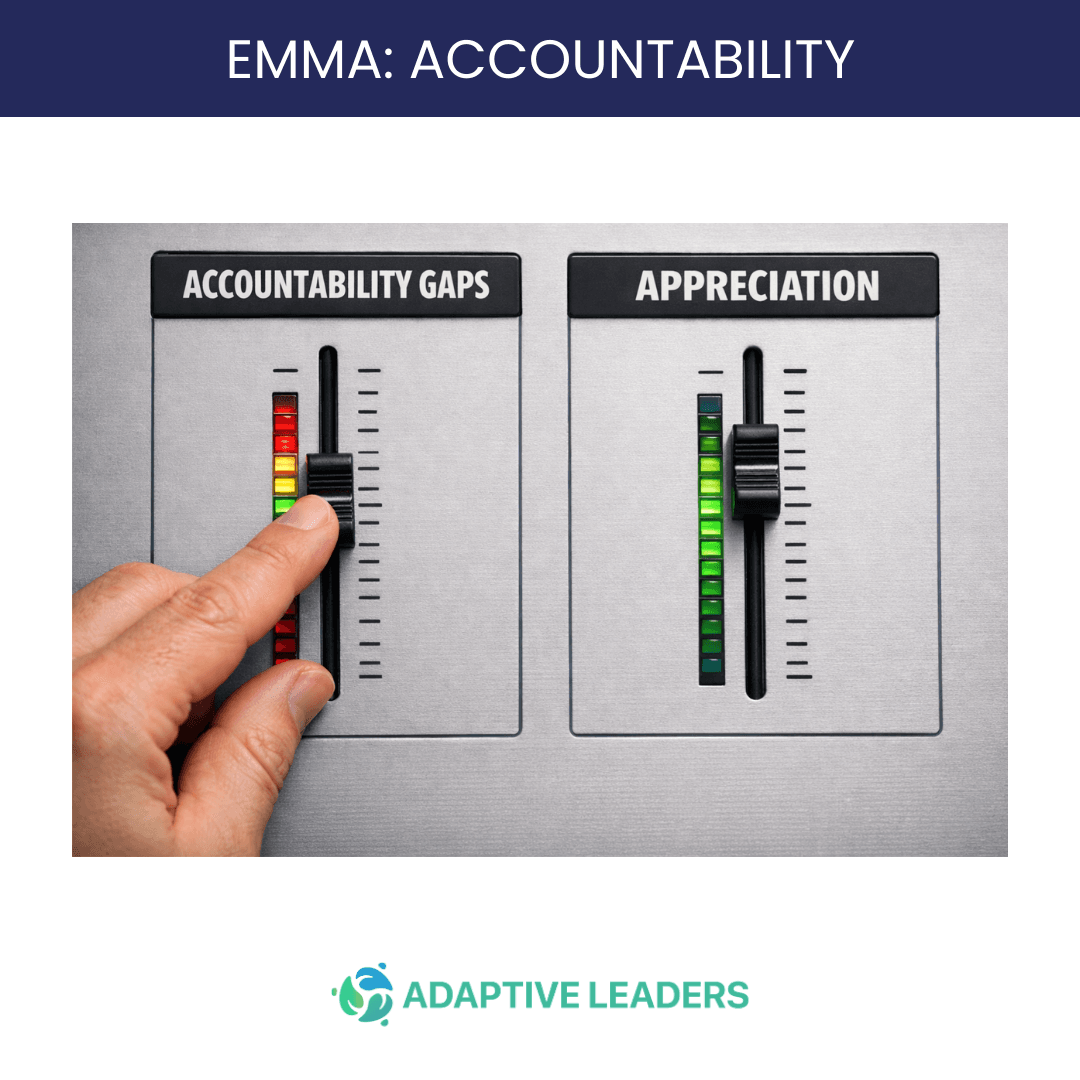
The Accountability part of our Performance Leadership (aka EMMA) framework is one of the most popular and requested topics for team coaching:
- Expectations
- Motivations
- Measurements
- Accountability
Usually, leaders gear up for the courageous conversations of increasing intensity. What they are often surprised to find is how important appreciation is when holding people accountable to their commitments.
Which Way Do You Lean?
At work, leaders naturally lean one way or the other, although it may vary with different people. Some people are naturally giving appreciation left and right but shy away from those more difficult Accountability Gap conversations.
Others focus mostly on what’s not working, improvements that need to be made, and problems that need to be solved. They may, like the couple in our story, take good performance for granted and almost never express appreciation when their team meets or exceeds expectations.
At home, those same people may lean the other way. Which way do you lean with your friends? Your spouse? Your children? That child vs. that child? Your parents? Your in-laws? Your neighbors? Your landlord? The people behind the desk at the government office you hate going into?

Corrupt Cookies
One final story about appreciation. One of our coaches who lives in China told us about a government worker who went out of her way to help their family solve a paperwork glitch. It would have been easy for the worker to say, “I don’t have a button for that in my system,” and our coach would have been stuck.
But instead, the lady did some internal process hacking and created a workaround that got the paperwork unstuck. Our coach’s wife was so thankful she made a plate of cookies, and they went back the next week to present it to the lady (being careful to include enough cookies so that everyone in the office could have some).
The worker’s face morphed into a huge smile that was tinted with something else unreadable. Was that sadness?
“Oh wow! You shouldn’t have,” the government worker said with the enigmatic expression.
“It was no trouble at all. You helped us solve the paperwork problem and we wanted to show how much we appreciate that!”
“No. I mean, you really shouldn’t have.” The lady pointed to the ceiling. “There are cameras all over and I can’t accept any gifts at all.”
“But these are just cookies. You can share them.”
“Sorry. I really can’t. But I have received your appreciation and I’m very touched.”
Our coach and his wife left the office still holding the plate of cookies, not realizing the anti-corruption laws had reached such a level of strictness. But they were still glad they’d tried. The government worker was happy. Everyone in the office who witnessed the exchange was happy. And our coach and his wife ended up with extra cookies!
Don’t you think that office worker is going to think and feel differently next time she encounters a paperwork glitch? The appreciation, even if it wasn’t fully expressed exactly the intended way had left a mark and reinforced what “doing a good job” meant.
3Cs and Accountability
How you flex your appreciation muscles will require the 3Cs to go beyond what’s natural for you.
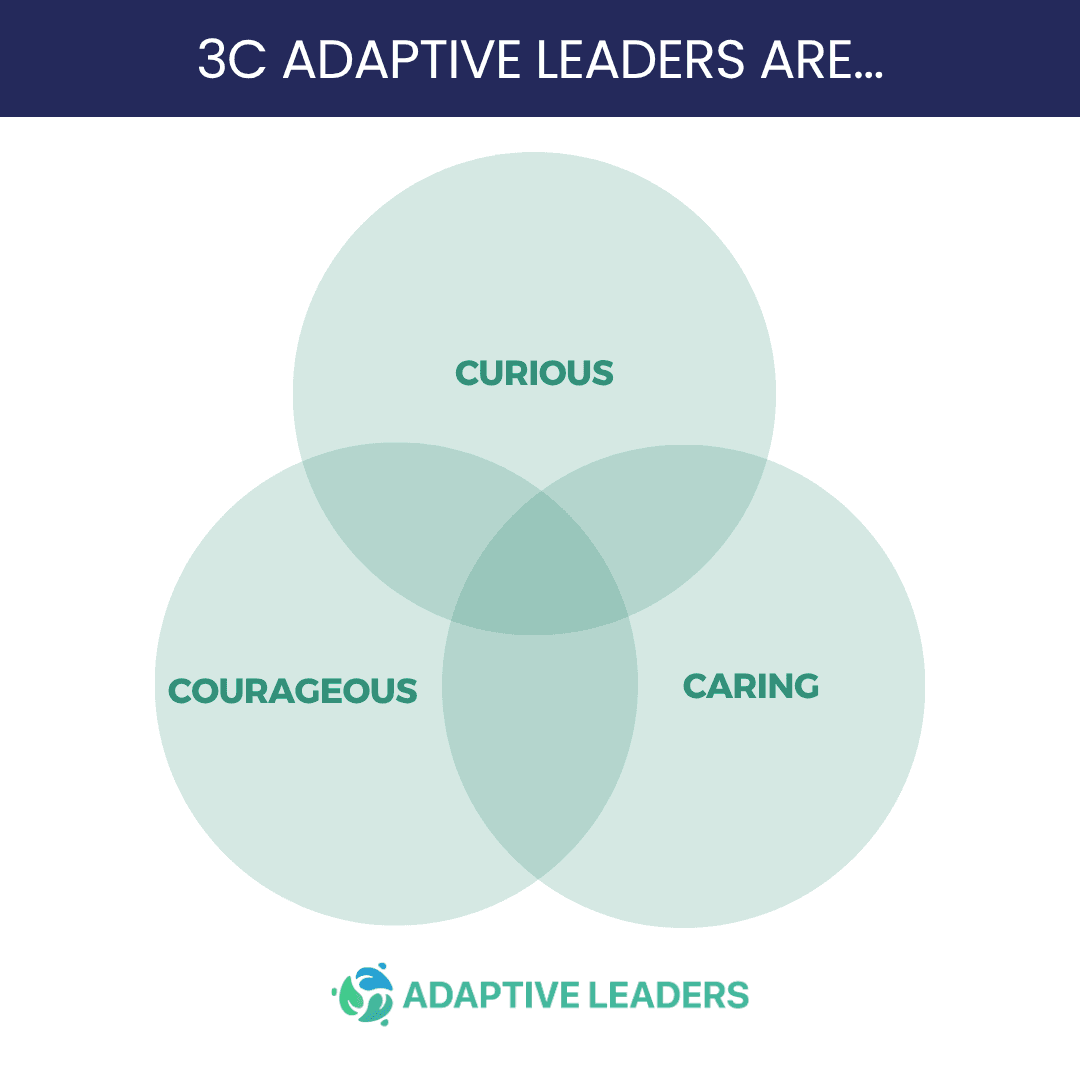
- Curiosity to explore who needs appreciation and how they can best receive it from you.
- Courage to express appreciation in ways that might backfire (but might still be worth it).
- Care for the people who are meeting or exceeding expectations but don’t know if you’ve noticed.
Next Steps?
Forward this article to team members (or a friend or family member if you discern that’s a good idea).
Also, feel free to take any images from this article and print, share, save, etc.
Finally, if you’d like to talk about an Adaptive Leader Journey for your team, feel free to book a free 20-minute call with one of our coaches to discuss how we can support you in your next big breakthrough.
Looking forward to talking to you soon!