
What happens to a skill once your team stops using it?
Imagine a leader who is excited about cutting report writing time by 70% by using AI. Six months later, the tool goes down for a day right at the exact time the critical report is due to stakeholders. That leader doesn’t know how to produce the report from scratch anymore, and the result is a disaster.
On the surface, it sounds like a cautionary tale about over-reliance on technology. But there’s actually a deeper philosophical issue about the role of humans at work.
The Loan You Didn’t Know You Took Out
Every time a task gets automated, an organization makes a trade: increased speed now, reduced competence later. Researchers call this deskilling, and it’s no longer a fringe concern. A 2023 case study of an accounting firm found that reliance on automated software eroded staff’s awareness of their own work, their competence, and their ability to judge whether the output was even right (Rinta-Kahila et al., 2023). When the system failed, the firm discovered its people could no longer perform the core task the software had been doing for them.
That was before generative AI reached every desktop. A 2026 Boston Consulting Group survey of C-suite leaders found that half are already seeing deskilling inside their own organizations, and more than 60% expect it to become a material threat within three to five years (BCG, 2026). Judgment, problem framing, and creative thinking—the exact capabilities leaders say matter most for human contributions to the workplace—are the ones most at risk.
Where the Debt Shows Up First
The cost rarely appears on a quarterly report and is often “obscure, acknowledged by neither workers nor managers” (Rinta-Kahila et al., 2023). It shows up as a capability nobody planned to lose. In medicine, a 2025 study of endoscopists found that after months of routine AI-assisted screening, detection skill measurably declined when the AI was removed (Budzyń et al., 2025). The tool made everyone faster. It also, quietly, made them less capable without it.
Swap the industry and the pattern holds. The task that used to build judgment (the interview, the first draft, the tough call) is often the same task AI is best at removing.
A Conversation Worth Having
This is exactly the territory Dan Strode explores with us this week on The Adaptive Journey podcast (episode 007). Dan shares real organizational examples of “developmental debt” he’s seen up close in his consulting work. This is one of the essential elements discussed in his book The Quiet Reckoning: A Transformation Blueprint for HR in the Age Of AI. He also shares the physical reminder he keeps on his wrist for one of the 3Cs he says he needs to lean into most these days.
Listen to the whole episode wherever you get your podcasts.
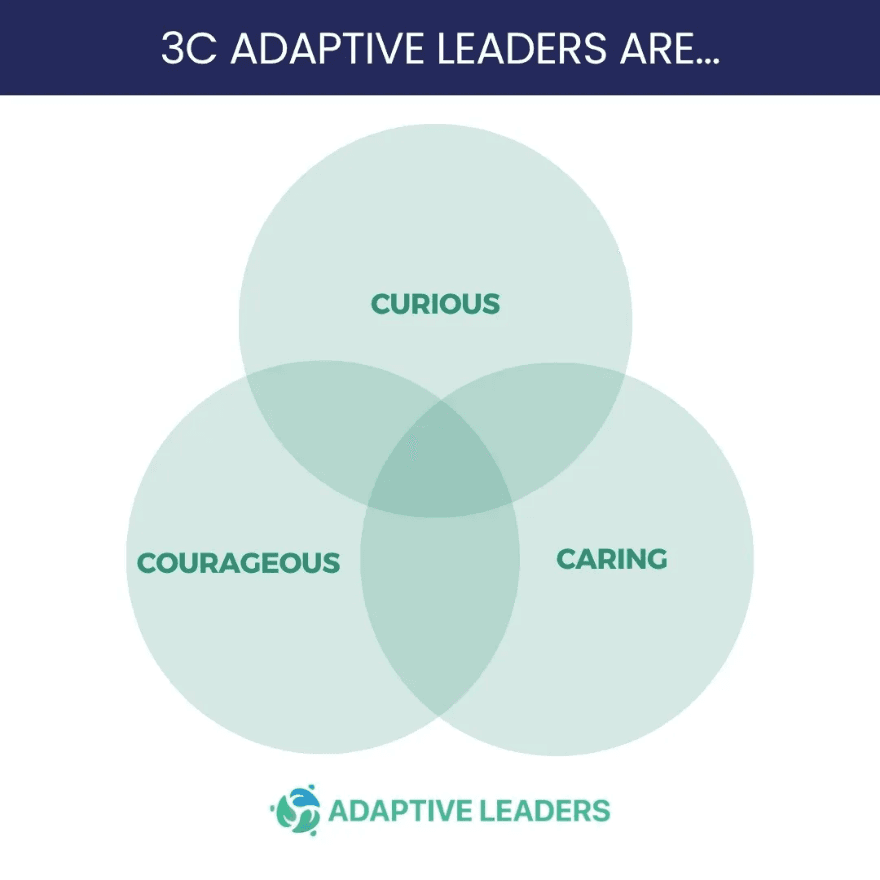
The 3Cs and Developmental Debt
You can start identifying and dealing with developmental debt right away by employing the 3Cs of adaptive leadership.
Curiosity
- Which skills has my team quietly stopped practicing since we adopted this tool?
- Where are we optimizing for speed when we should be protecting judgment?
- What would we lose if this tool disappeared tomorrow?
Courage
- Where do we need to slow down and let people struggle, even when AI could solve it faster?
- What decisions are we outsourcing that we should be teaching instead?
- Who needs a stretch assignment instead of a shortcut?
- Who will be upset if I start working to identify and counteract developmental debt?
Care
- Where can we deliberately build friction back into someone’s growth?
- Who on the team is losing something essential but might not recognize it yet?
- Where is AI taking away something essential from relationships at work?
- Where is AI eroding my self-care?
Every loan gets called eventually. The only question is whether you find out when it’s convenient, or when the system goes down and the organization needs the skill that quietly drifted away.
Adaptive Leader Studio™
This is exactly the kind of deep, exciting work we do with leaders in Adaptive Leader Studio™. If you’d like to make a fast and lasting change to flex your adaptivity, join us online or in person near you.