How good are you at getting people on your side?
Influencing Up
An intelligent and competent graduate intern at a well-known tech company in southern China was feeling lost. She enjoyed the company but didn’t know how to move up in the organization. She was annoyed that people saw her as “just the intern.”
One day, a workshop about influence changed everything for her. What she wanted was more visibility, and a way to contribute more to the company.
“Great, but what does your boss want?” our coach asked.
She thought about it for a moment and said, “I suppose he also wants me to contribute more.”
“So you want the same things, but he doesn’t know what you can offer. How can you get that information to him?”
She thought about it and smiled at the simplicity of her own idea.
Influence As a Strategy
Organizations are familiar with strategic plans. We know we can’t leave the future results of our company, team, or even self performance to chance. But when most people think about influence, it seems like such a soft skill it might as well be a cloud. Most people assume you’re naturally good or bad at it. On the negative side, it can feel like manipulation or office politics.
But actually, influence is built in steps and those steps can be strategic. You need many of the building blocks you already know: a goal, a map, and an action plan.
Most people don’t set influence goals because it doesn’t occur to them. A recent conversation with an engineer revealed his ideal situation at work was to report directly to the global COO. Our coach said, “Great! Let’s make that happen!” He was visibly startled by the idea, because it was an influence goal rather than a technical one.
The map and plan can be as creative as you want. For example, the Cohen & Bradford (2017) influence model is built on reciprocity. It states that everyone likes some things, but they’re not always the same things you like. By figuring out what the other person values, you can start to influence them.
We like to say, “What’s their chocolate?”
If I’m a person who likes chocolate, then giving me actual chocolate is going to make me want to help you more than I did before. But if I don’t like chocolate, then giving me chocolate is at best going to make me feel indifferent about you, and at worst make me like you less (“You didn’t even know I don’t like chocolate?!”).
It’s not as simple as “give your boss chocolate and he’ll give you what you want.” But at least that’s an example of a very simple goal, map, and plan in the realm of influence.
It Doesn’t Need to Feel Yucky
Many people feel that seeking out and giving chocolate has already strayed into the dark side of influence, politics, and even manipulation. It’s good to know your own tolerance for this topic, but a reframing may help.
Here’s a simple test:
- Could you tell the other person your goal?
If so, that probably means it’s a goal that serves the organization and not just you. If not, you might want to think bigger and ask “Why do I want to get promoted?” or whatever it is.
Another reframing is to look at what the other person’s chocolate is objectively. If it’s something that they truly value (and doesn’t violate your own conscience), then giving it to them can be generous on its own merit. For example, if someone likes fairness, and you go out of your way to demonstrate that, even if you don’t immediately achieve your goal, cranking up the fairness might have been a good thing to do anyway.
Influence: The Most Neglected Leadership Topic
This topic came up on Episode 12 of The Adaptive Journey Podcast. Beth Eckstein and Albert Wolfe discuss the Adaptive Leader Studio™’s influence modules and how influence can feel “salesy” without the correct framing. Beth describes a project she was only partly sold on and what “chocolate” got her through.
The 3Cs and Influence
One way to explore the edges of what you can accept as an influence strategy is to use the 3Cs of Adaptivity.
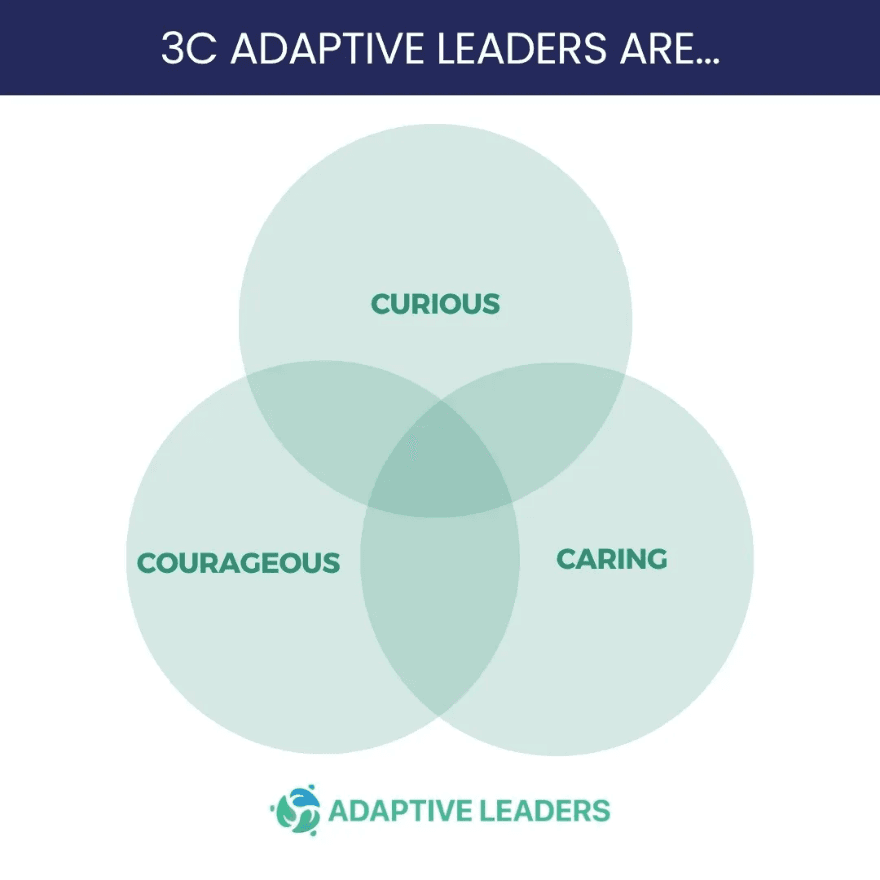
Curiosity
- What “chocolate” do I value that I’m overusing on others?
- What is the other person under pressure to deliver right now?
- What would success look like from their shoes?
- What have I seen them do that reveals their “chocolate?”
Courage
- What is stopping me from asking for help with influence?
- Who have I not shared my goal with, and why haven’t I?
- What are the risks with trying and failing to increase my influence?
- What are the downsides to successfully influencing someone?
Care
- How would my influence plan serve the other person?
- What “chocolate” can I offer them that would be good regardless of my influence goal?
- How do I need to protect my self-care while growing my influence?
Whatever Happened to…
Remember that intern who wanted to contribute more? With a tiny bit of planning, she decided to simply invite her boss to sit with her at lunch. She realized one of his “chocolates” was spending time in meaningful conversation. She had never done that and a lunch appointment in the company cafeteria was the perfect opportunity.
Within a few weeks she had been promoted out of “intern land” ahead of schedule.
It served her, yes. She got what she wanted. But most bosses would love to engage more with motivated, considerate, and strategic staff.
Don’t wait for that person to get on your side. Make it happen. Start by finding their chocolate.
Adaptive Leader Studio™
This is exactly the sort of exciting, deep work we do with leaders in our Adaptive Leader Studio™. If you’d like to make a fast and lasting change to flex your adaptivity, join us online or in person near you.