
What would happen if you stopped doing something you know you should?
The Shortest List
A very common exercise for leadership teams is the Start | Stop | Continue list. But if you’ve ever done that exercise, you’ll know the hardest column to fill is “Stop.”
At a recent leadership retreat, the leaders put dozens of things on the Start and Continue lists, but the Stop list had only “Stop doing things AI can do” and a few other weak ideas. They scratched their heads wondering “What else are we doing that we should stop?”
In addition to having trouble coming up with ideas to stop, it’s also hard to actually stop them. Another leadership team decided they wanted to stop having a certain type of long meeting. “OK, we’ve all agreed? That type of meeting gets capped at 30 minutes?” Yes. They all agreed.
Last time we checked, they hadn’t yet stopped their longer meetings. In theory that could have stopped the very next day. But it didn’t.
What’s Hard about Stopping
There are several reasons it’s hard a) write the Stop list, and b) actually stop doing the things on it.
In our Leadership Math article, we put it this way:
“Leaders are great at adding, terrible at subtracting.”
That article proposed a practical rule: if we add something, we must take something away. But agreeing with the math doesn’t necessarily change what happens during the daily whirlwind.
We need to understand what keeps subtraction off the list and what keeps a decision from becoming action.
Why We Struggle to Fill the Stop List
Research published in Nature found that people often overlook useful changes that involve removing something. Multiple experiments involving Legos, mini golf course design, and even soup recipes showed that participants were more likely to miss improvement options brought about by subtraction, especially when “removing something” wasn’t suggested (Adams et al., 2021).
So our brains appear to be wired to look for more rather than less, which helps explain why the Stop lists are harder to write. A few other common cognitive processes you may have noticed:
- When someone asks how to solve something, a new step, meeting, document, or procedure may come to mind before removing an existing one.
- Once we have a possible addition, we may move on (“case closed”) before considering what subtraction could accomplish.
- Our crowded schedules keep us trapped because it’s so hard to get the time to think about what to subtract.
Remember, subtraction isn’t always better. And not every team or leader struggles for the same reasons.
But it’s good to know that the Stop column and subtraction deserve some dedicated thinking time that might not occur naturally.
Why We Still Don’t Stop, Even When We Think We Should
Once we know what to stop, it’s still hard to actually stop it. This probably boils down to worries.
We’re currently doing the thing because someone thought it was a good idea. We’re worried if we stop, then things will get worse. At least for now we know what’s going on, but if we stop and things get worse, how much worse might they get?!
Let’s take the long meetings as an example. Some of our worries about stopping those might be:
- Work won’t get done
- Relationships will weaken
Those are legitimate concerns, as are the following ones.
It might be fear of success. Let’s say the meetings really do get more efficient and now there’s extra time in my schedule. I might worry:
- I’ll appear to be lazy since I won’t have anyone in my office
- I’ll have time to do that work I’ve been dreading (see The Dread List)
And going even deeper still:
- I’m not sure where my value comes from if I’m not in a meeting.
All of these “worries” can prevent leaders from actually stopping. But they are usually not discussed. Usually leaders feel so accomplished at having come up with WHAT to stop (and agreeing on this), they haven’t taken the time to ask, “Why didn’t we stop this a long time ago?”
The 3Cs and Stopping
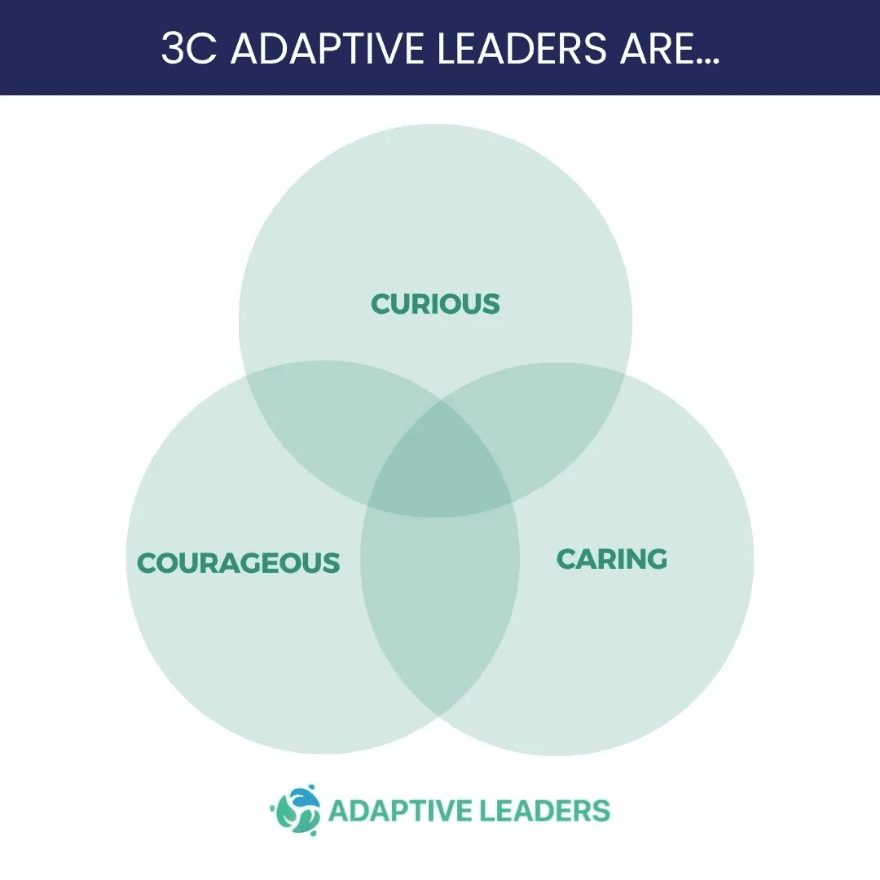
Curiosity, Courage, and Care can help us explore what makes stopping difficult and take a real next step.
Curiosity
- Why didn’t we stop this already?
- What’s the smallest version of stopping this we could try?
- What do we predict would happen if we stopped, and how could we test that prediction on a small scale?
- What’s one thing on our calendars that wouldn’t feel too risky to remove?
Courage
- What’s one thing on our calendars we know we should remove but does feel risky?
- What worry have I left out of the conversation because it feels uncomfortable to admit?
- What will we actually stop for the next two weeks, and how will we respond when the old habit pulls us back?
Care
- Who depends on this activity, and how can we involve them in designing the experiment?
- How can we tell whether stopping something quietly creates more work for someone else?
- What would help me feel comfortable using some recovered time to simply rest?
Make Room for What Matters
The Stop list asks us to identify work we could remove. Following through asks us to face what we fear losing when we remove it.
Maybe the top of our Stop list needs to be “Stop worrying about…” and see where that takes us.
The Adaptive Leader Studio™
Do you want to lead your teams to achieve extraordinary results? Explore the 4 conversations that make that possible by enrolling in our affordable Adaptive Leader Studio™ today.