
An article from our “Adaptive Hacks” series
How much of what you’re avoiding is backed by evidence?
A leader knew he needed to get better at saying “no,” but just like all adaptive challenges, knowing and doing are miles apart.
There were many places this showed up in his week, but one spot was simple enough to actually examine. “For example,” he said, “if someone invites me to do something after work, I’m worried if I don’t go then I won’t get an invitation next time.” This worry doesn’t respond well to the “Extreme Opposites” hack, because asking “What if the more I refuse, the more invitations I get?” doesn’t make sense.
So we took a different approach. Instead of looking into the imagined future, we looked at the real past. We pulled up the last three times he’d actually said “no” to an invitation, and checked how many days it took, on average, before that same person invited him to do something else. We decided ahead of time that if the average was 3 days or fewer, this actually wasn’t a big deal. We took inventory of what really happened.
Many people never take that step.
The Brain Shortcut
Our brains are super bad at subconscious math. We think some things are way more common than they are, simply because the impression left was so vivid. This has been named the “availability bias” (Tversky and Kahneman, 1973). For example, if you’ve recently heard a news story about an airplane crash, you will instinctively believe that airplane crashes are far more frequent than they are because it’s fresh and vivid in your mind. It’s a mental shortcut your brain takes that can work against you.
This is essentially what the leader was suffering from. The “Take Inventory” adaptive hack forces you to stop relying on instinct and face the cold, hard facts.
Here’s how you can use this hack:
- Name what you think is true (usually “If… then…”)
- Figure out what kind of inventory you could take (where could you get some cold, hard facts about it)
- Pull three to five real instances (Not “usually”; actual ones)
- Write down the data (Actually write it, on paper or in a note, not in your head)
If you do that, you have a chance to retrain your brain.
Whatever Happened…?
Remember the leader in the beginning story? He used text messages as a quick way to take inventory, and burst out laughing when he saw his own answer.
“It appears the average number of days is zero,” he said. “Here’s that same person I said ‘no’ to inviting me to do something else later that same day.”
This is the power of taking inventory. Our brains have cut reality out of the equation because the worry feels so real. But what are the facts? The only way to find out is to look.
This kind of self-research is also extremely safe, because it looks backward and doesn’t require talking to anyone else. In this case, the facts took about 25 seconds to find. Once he had them, he could apply the same re-trained thinking to other areas of his life where he needed to increase his courage to say no.
Check the Track Record
This idea came up in a conversation with Jonathan Cox on Episode 8 of The Adaptive Journey. Cox has spent more than two decades building businesses in China, and one of his standing rules is to keep checking his own assumptions against what actually happened.
He described a moment where he took inventory of a common myth about how to build relationships and found out, “Wait a minute, that doesn’t appear to be true for some of my best relationships.”
Listen to the whole episode wherever you get your podcasts.
The 3Cs and Taking Inventory
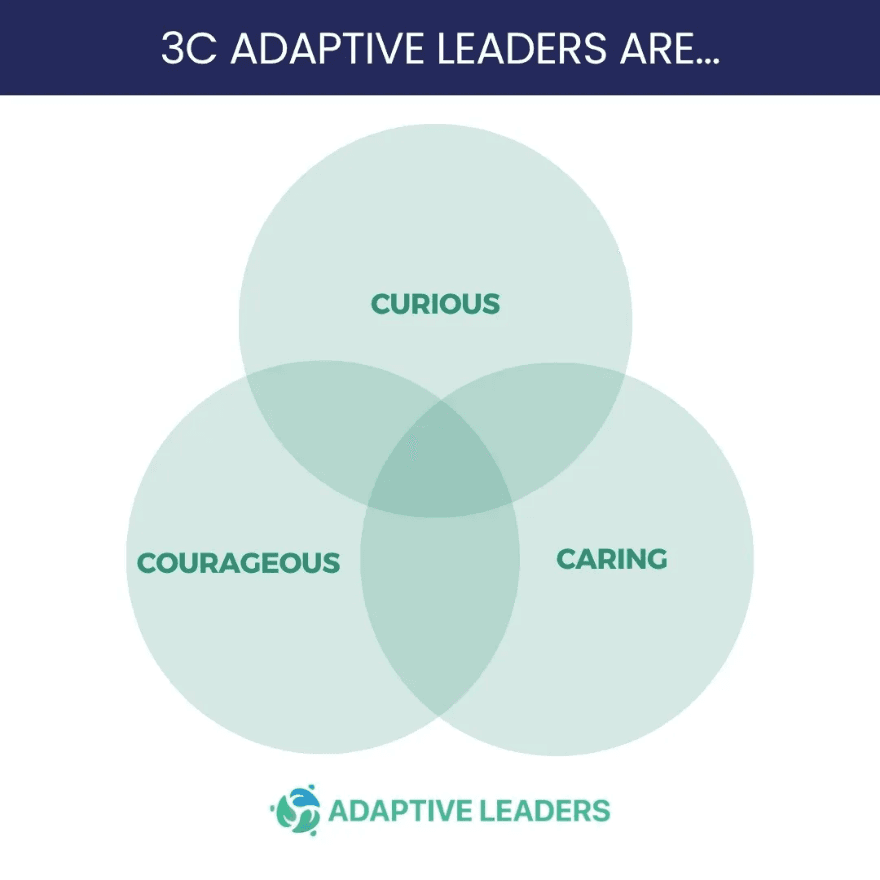
You can start taking inventory of your own assumptions right away by employing the 3Cs of adaptive leadership.
Curiosity
- What pattern am I assuming exists that I’ve never actually checked?
- Where do I need to get real data instead of relying on a feeling?
- What is surely true but maybe not completely true about this?
Courage
- What am I avoiding checking because I’m afraid of what I’ll find?
- Where have I built a rule around a fear that may be outdated?
- What implications of “taking inventory” am I hesitant to face?
Care
- Who on my team might need a gentle reminder that they might be avoiding something because of an unverified fear?
- How could I help a team member take inventory of their own worry before it costs them an opportunity?
- Where is an old, unexamined worry of mine quietly costing my self-care?
Moving Outward
Taking inventory isn’t really about one invitation, or one leader’s Tuesday nights. It’s a small discipline with an outsized return: before you build a rule, a boundary, or an entire leadership habit around a fear, spend 25 seconds checking whether the fear is even true. Teams can do the same thing at scale. A good retrospective is really just an inventory habit with more people in the room.
Adaptive Leader Studio™
This is exactly the sort of exciting, deep work we do with leaders in our Adaptive Leader Studio™. If you’d like to make a fast and lasting change to flex your adaptivity, join us online or in person near you.